
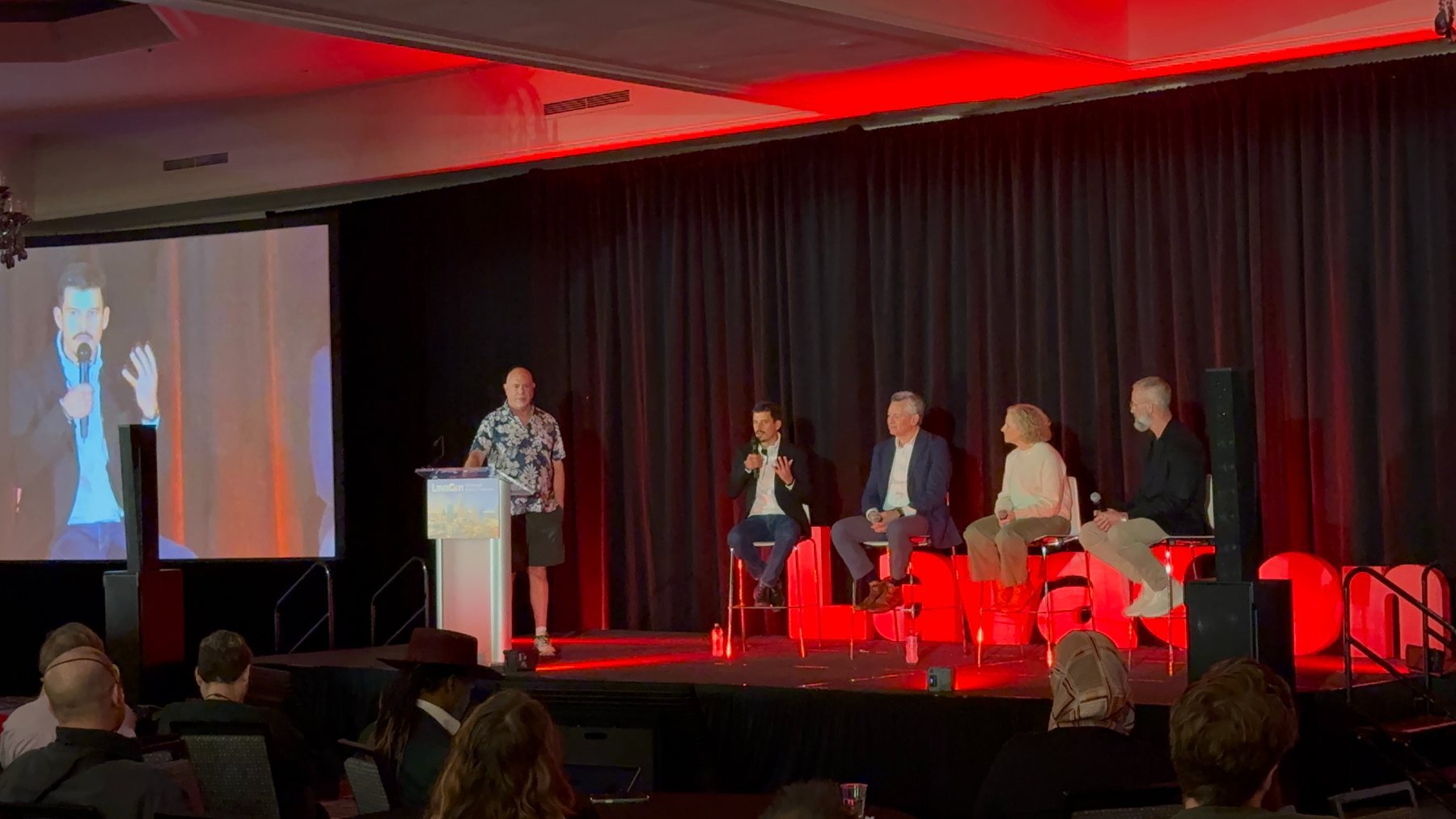
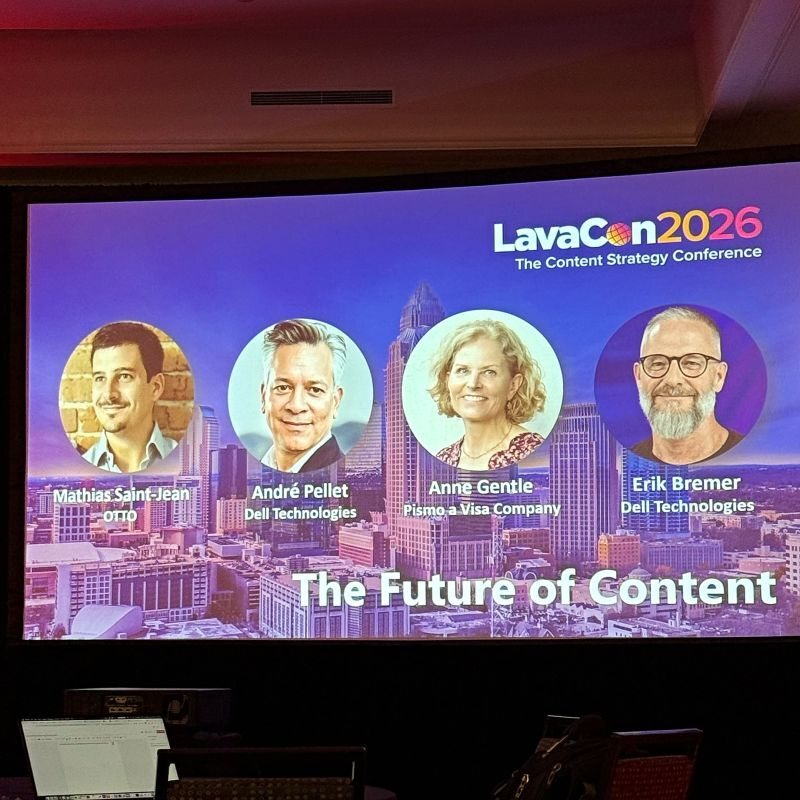
It took me three conferences in six weeks to get to that sentence. I left UNBOUND by Hubspot convinced that this is the age of the builder, and wrote that while the model is rented, the harness has to be ours. LavaCon answered the question I had left open: who builds that harness? People do, before the model touches anything.
LavaCon has kept a human scale. Conversations there go past the pitch and into the work itself, and much of what follows came out of them.
LavaCon's audience builds what readers never see: content models, taxonomies, controlled terminology, reusable components. That work now decides how reliable AI output can be, because a model is only as consistent as what it's given.
This community also thinks in reuse. A safety warning is written once and reused wherever it applies. Add localization, with illustrative numbers:
An error in that sentence becomes 800 errors, most of them in languages its author can't read, and a good decision lands in 800 places too. AI translation doesn't only copy errors, either. It can add new ones.
Wikipedia learned that this year. In March, 404 Media reported that editors had restricted a number of translators paid by the Open Knowledge Association to translate articles with the help of large language models. Some translations had swapped sources or added unsourced sentences. Repeat offenders can now be blocked: accountability, back on a person.
That arithmetic decides where people belong. A reviewer checking 800 published copies has 800 chances to miss something. Get the source sentence right, approve its translation once, and the fix travels everywhere it's reused. End review still catches what slips through; it just can't carry the whole load.
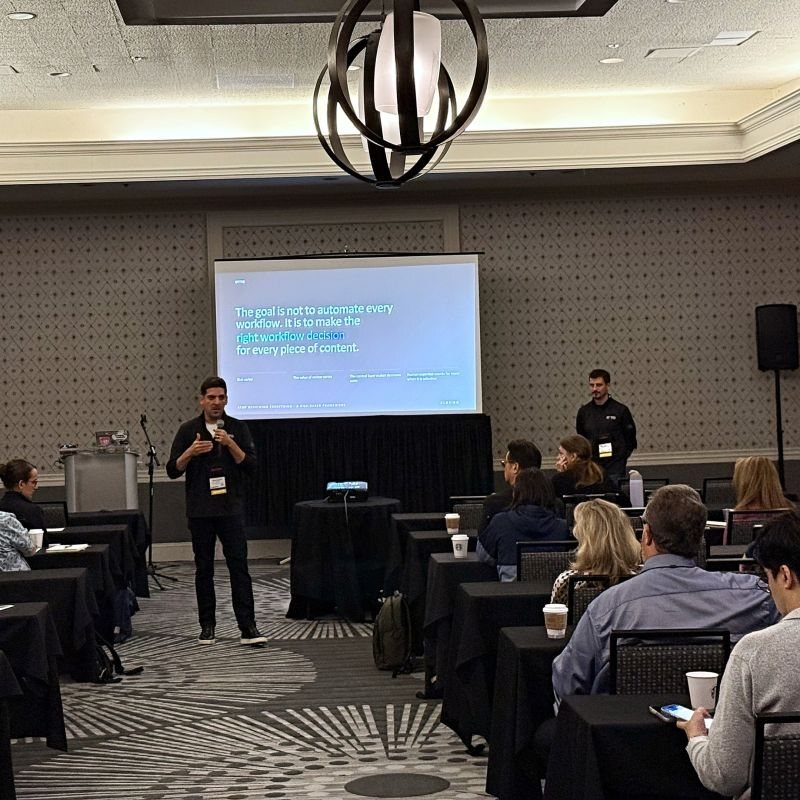
On Tuesday morning, Adam Goldman and I presented Stop Reviewing Everything: A Smarter Model for Multilingual Content.
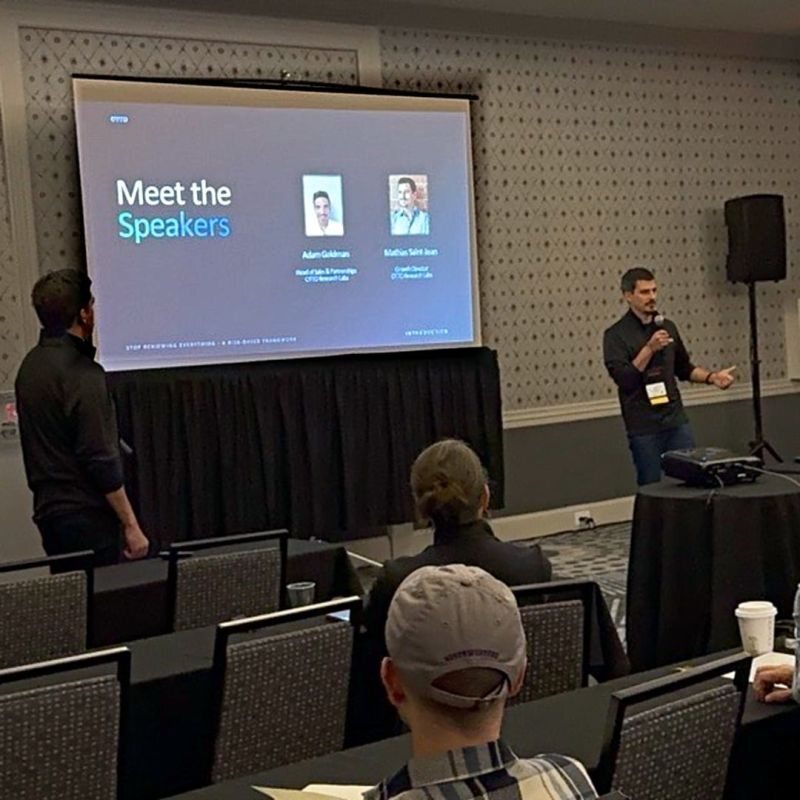
We opened with a test: three books, one of them invented, and the room answering with their fingers.
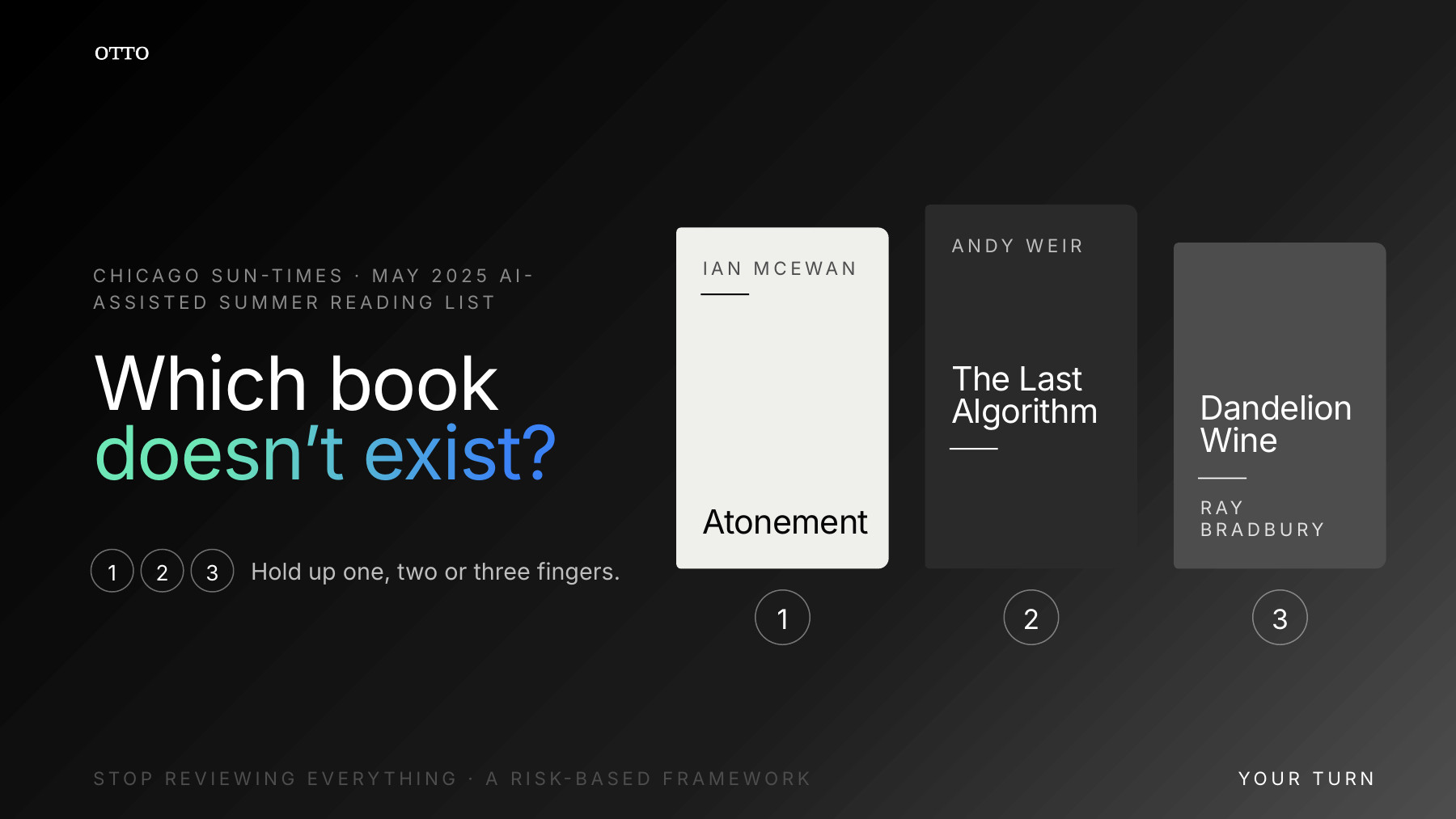
All three come from a summer reading list the Chicago Sun-Times ran in May 2025. The answer is number two: Andy Weir never wrote The Last Algorithm. Ten of the fifteen titles were invented, and the paper's own review found the syndicated section had never gone to its journalists for review.
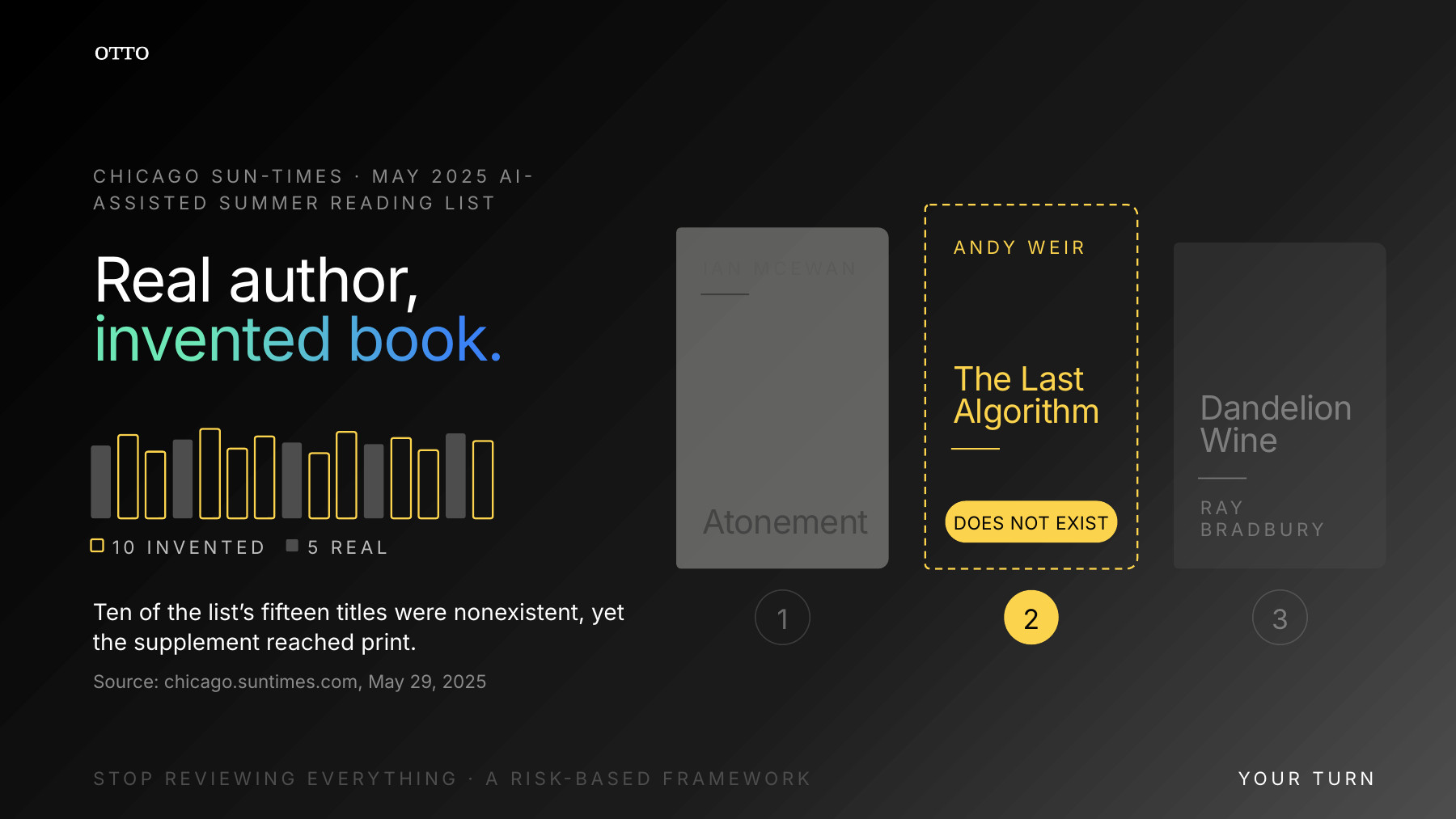
What would have caught it: another full read-through, or checking each title against a book catalogue? A review only helps if it includes the check that matches the risk, here, confirming that each book exists. That's where blanket review breaks down.
Many content operations still give an internal announcement and a safety instruction the same specialist review. Queues grow, costs rise, and the expert reading the routine update is the one the safety instruction is waiting for.
Our model starts from a simple observation: the content a company publishes most is rarely the content that can hurt it most.
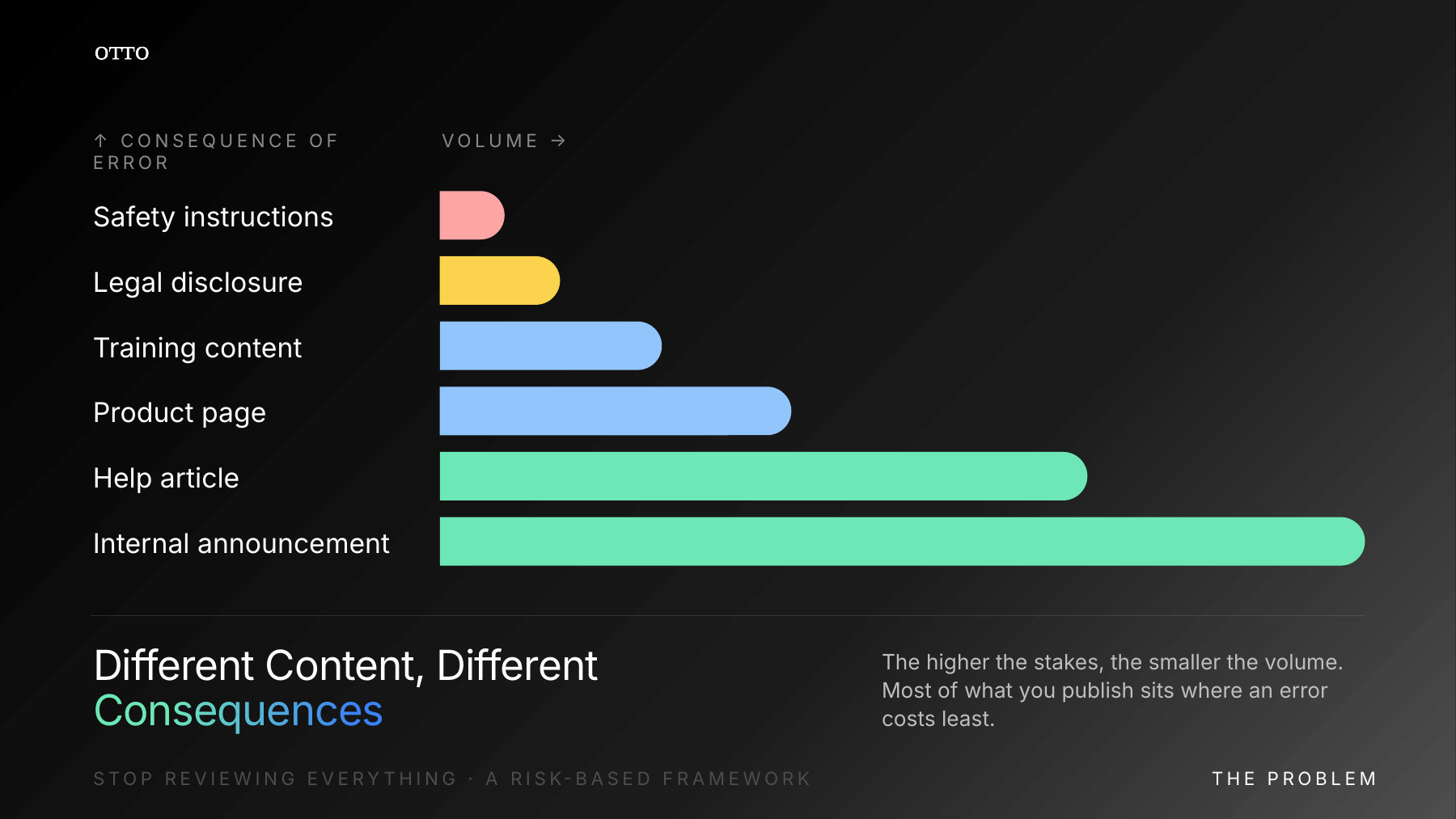
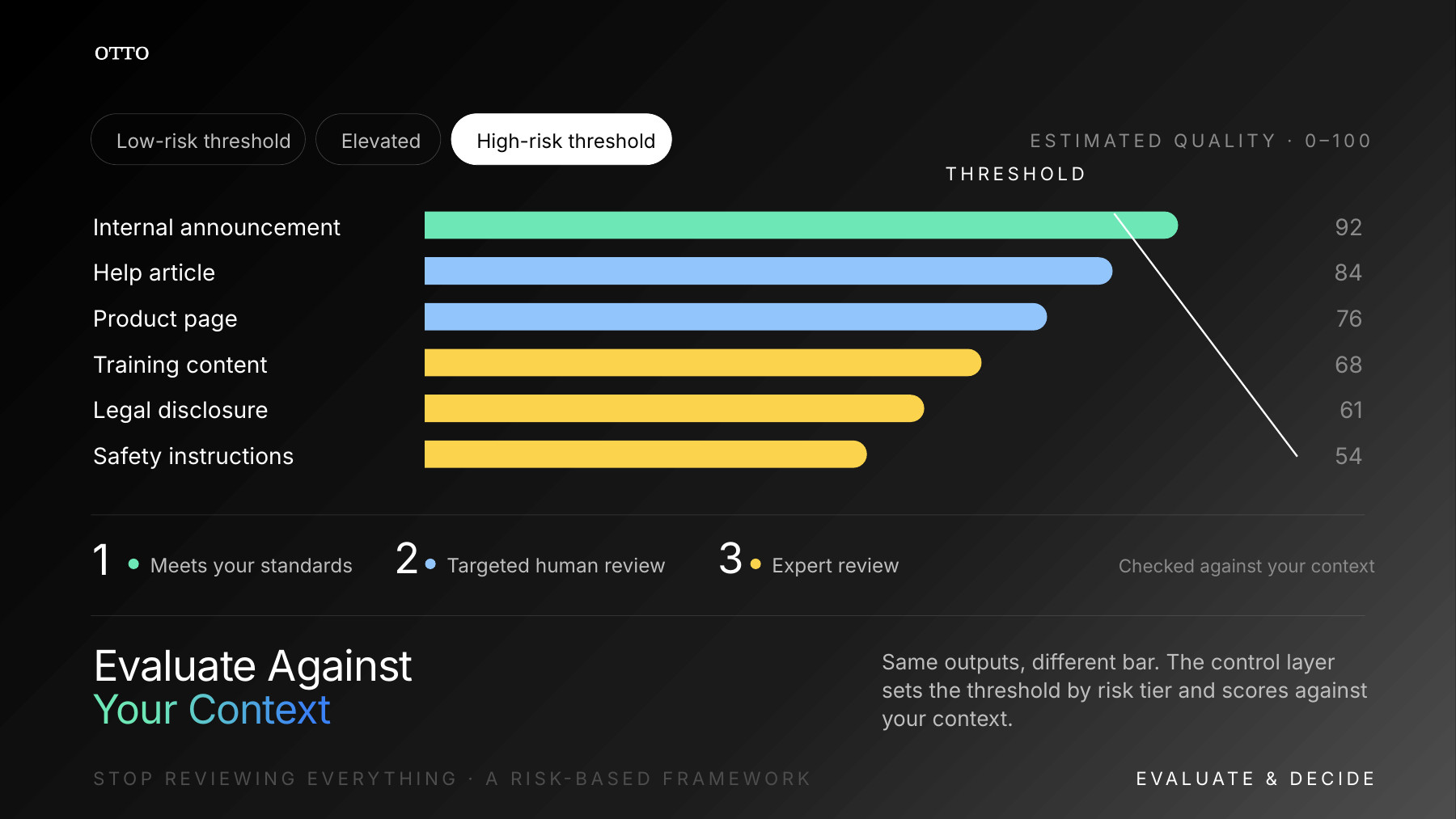
So we replaced 'AI or human?' with 'which workflow?', framed by four questions: what is the content, what could go wrong, what confidence is required, what human judgment is needed. Before production, each asset is scored on seven readings: audience, purpose, visibility, sensitivity, complexity, lifespan and consequence. The score sets the route: approved, a targeted review of the parts that carry risk, or a full expert review.
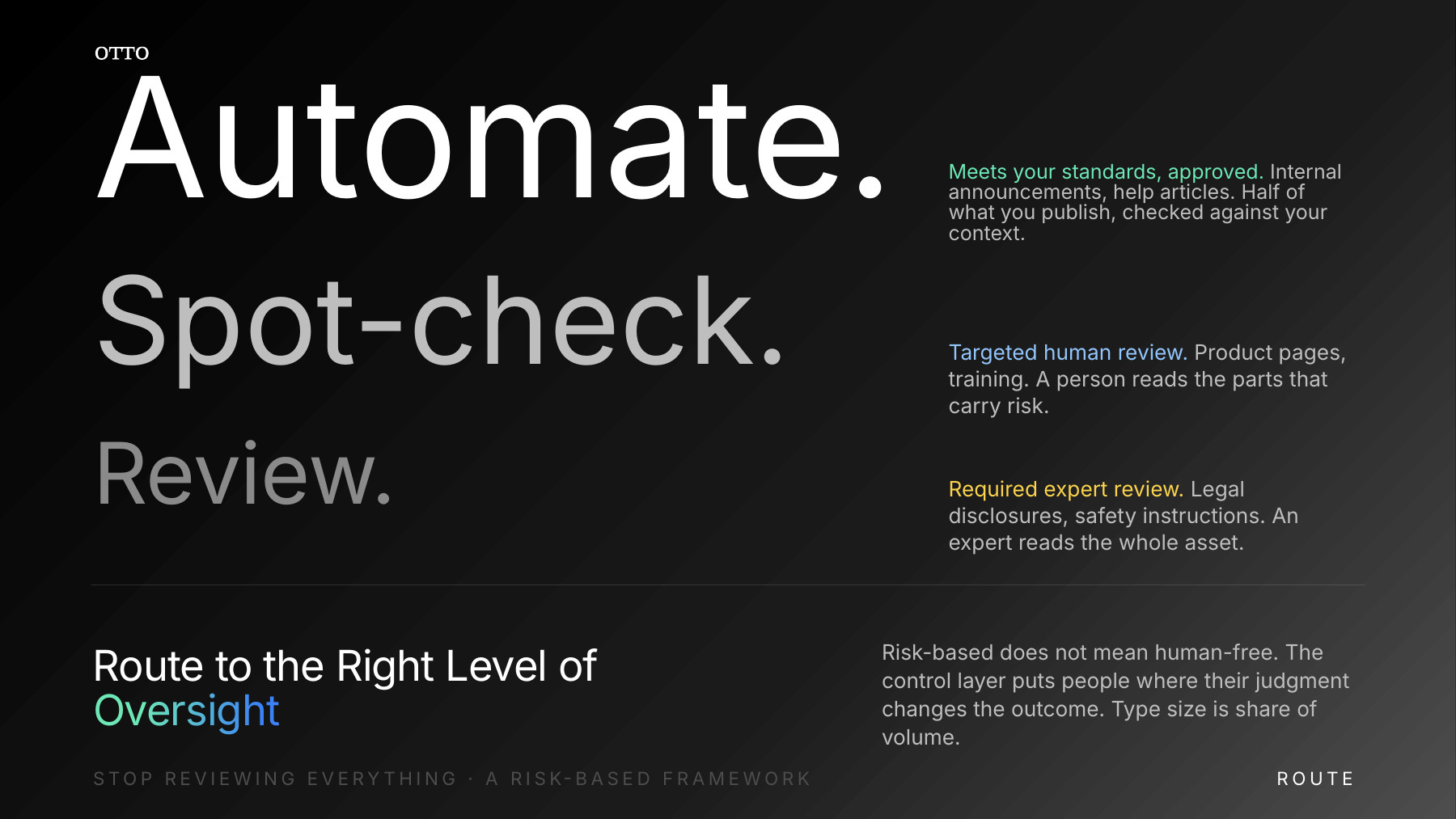
Risk-based does not mean human-free. People define the tiers and the thresholds, and their judgment goes where it changes the outcome.
Then a woman in the audience told us she owns content alone in a very large company. She wasn't asking how to automate more, but how to convince her boss to use a little less AI and give her more people and budget.
The first answer was to tie it to business outcomes. I added risk and brand reputation: hours saved fit neatly in a spreadsheet, while the cost of one public error is hard to estimate until it happens.
'Stop reviewing everything' sounds like an argument for fewer people. It's the strongest one I know for funding the right ones: it shows a boss which assets need an expert, and what happens without one.
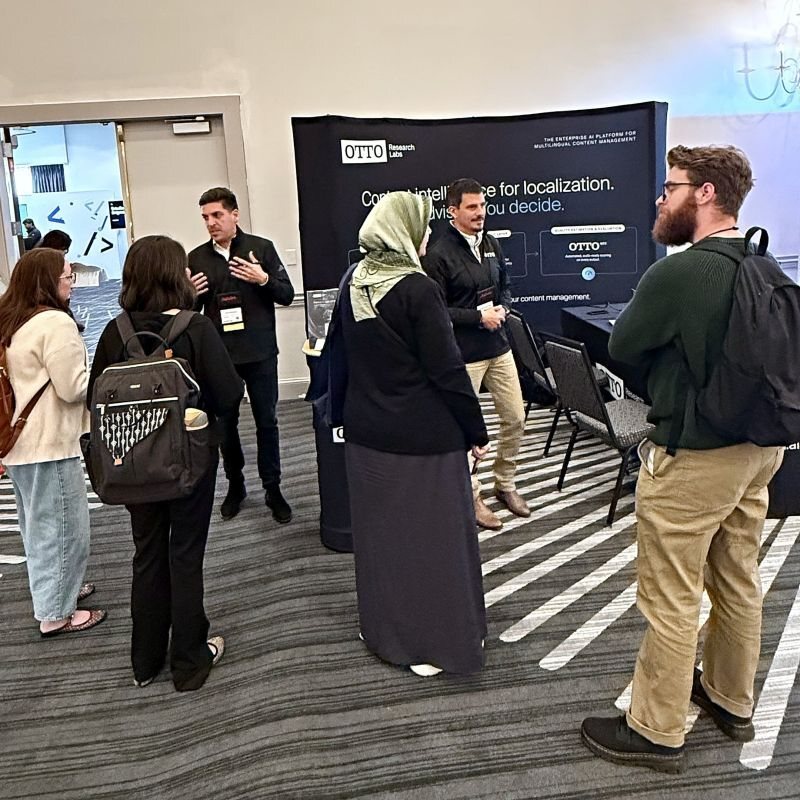
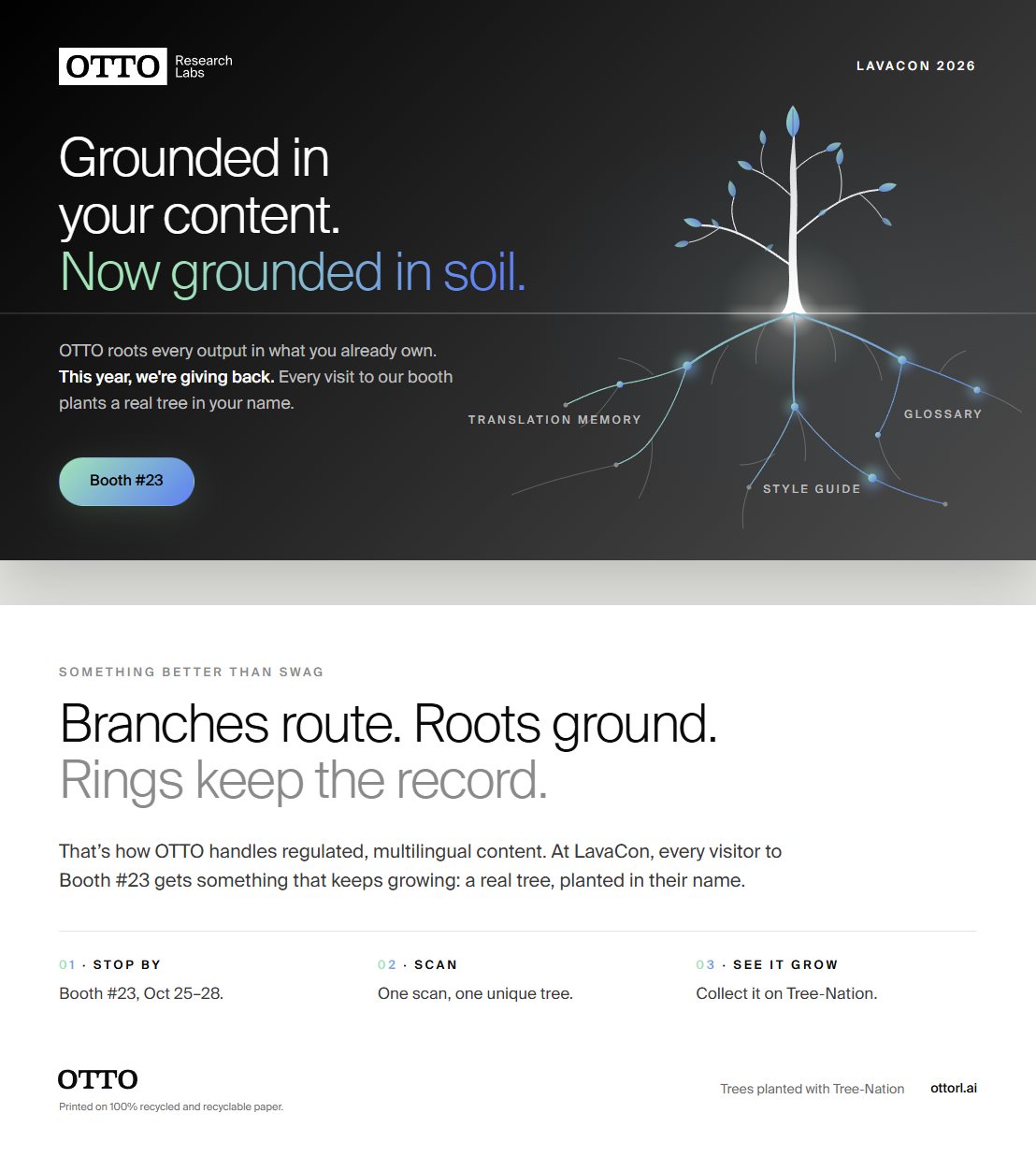
At booth #23, we spoke with teams from a large industrial equipment manufacturer, a large medical technology company and a global enterprise software company. Wherever content carries legal weight, so does its language. Two rulebooks show how:
Here is my position. In a regulated enterprise, a language is an obligation, and every new market multiplies it. That makes blanket review dangerous, not just expensive, because the device label waits in the same queue as forty help articles.
The content type won't protect you either: a help article about display settings and one about a safety feature can share a template and carry very different consequences. That's why our model scores consequence before production and sets a different quality bar for each tier.
Sooner or later, an auditor or a regulator asks who checked a translated label, and against what. 'Someone was in the loop' doesn't answer that. A name, a rule and a date do. In September, I argued here that a human in the loop who leaves no record is a hope, not a control. LavaCon sharpened that: the record starts before the AI produces anything, with the approved source, the terminology version, the risk tier and the bar it has to meet.
In practice, HITL turned the person from author into the last check before publication, and that seat has a known weakness. In a randomized experiment published in PNAS Nexus in June 2026, 1,339 teachers reviewed a deliberately mis-graded student exercise. When an overly harsh grade was labeled as coming from an AI rather than a colleague, their corrected grades ended up further from the right answer:
The authors call it 'a blind spot in human oversight'. Grading isn't translation, but the setup is familiar: a qualified person checking a machine's output at the end.
To be fair, the person at the end isn't useless: every fix that goes back into the translation memory, the glossary or the thresholds improves the next output. The real question isn't whether a human is in the loop. It's where the loop begins.
AI in the loop starts it with people. They write the source, choose the terminology, define what 'good' means for this audience, set the risk thresholds and decide where an expert must read every word. AI drafts, translates, checks and routes inside that frame, and what experts correct flows back into the standards.
In the illustrative portfolio from our session, half the volume flows with no human review, which only works because people set the tiers, thresholds and standards first. My bet: as machine-written text becomes ordinary, the differentiator will be content whose knowledge and decisions come from people, whoever drafts the sentences.
One way to tell which loop you're in: map one content stream from brief to publication and circle the first moment a human touches it. After the AI output, your experts are proofreading a machine. Before it, setting the standards and the risk rules, with the authority to stop what doesn't meet them, that's AI in the loop.